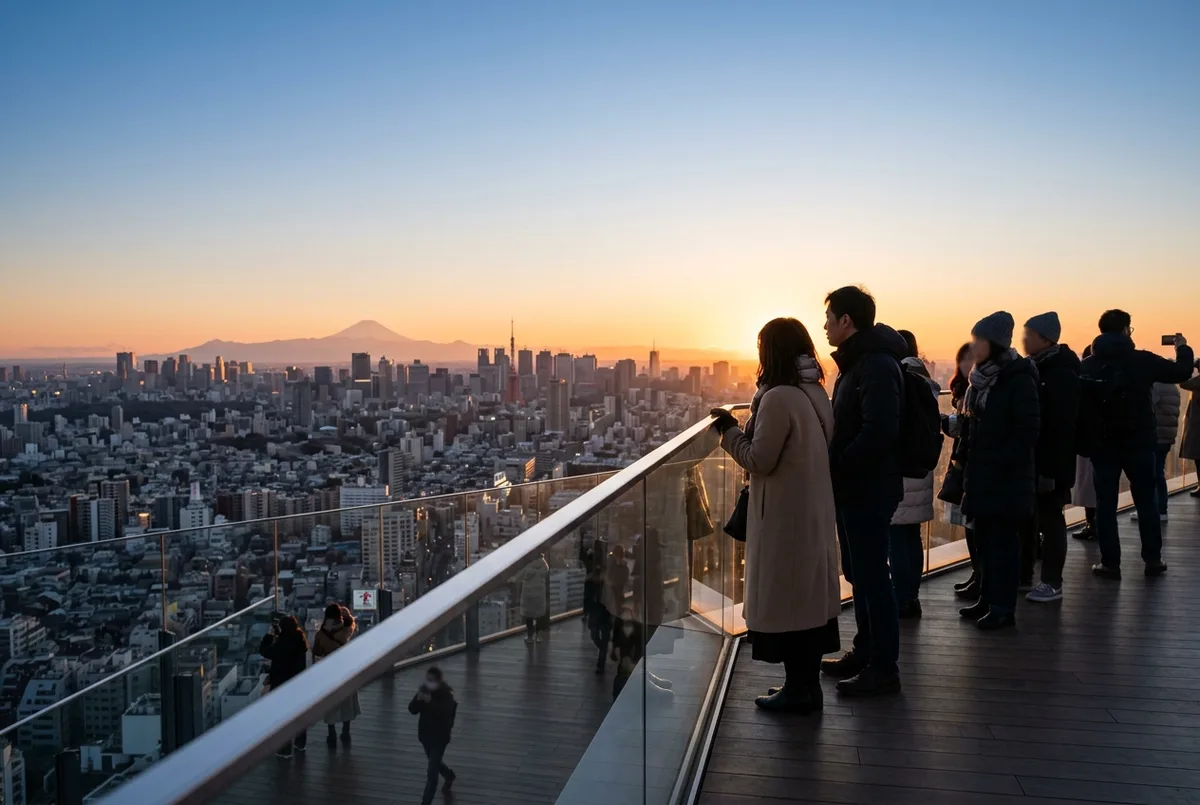
Shibuya Sky Mt Fuji views are possible, but they are a weather bonus, not a feature you can buy. On a clear day the mountain can appear on the horizon far beyond the city. On a hazy day you will see nothing but pale sky. Here is what I’d actually do: choose a morning slot in the cooler months, and keep your booking as flexible as you can. This guide explains the season, the time of day and the odds, so you can plan without being let down. For the main overview of the deck, read the Shibuya Sky observation deck guide, and to see tickets and tours, start at the Shibuya Sky homepage.
Can You Really See Mt Fuji from Shibuya Sky?
Yes, on some days, and only when the air is clear. The mountain sits roughly 100 kilometers away, so it needs a very clean sky to show up. Tour listings for the deck describe Fuji as something you may glimpse on a good day, which is the right way to think about it.
I’d treat Fuji as a lucky extra. If you book Shibuya Sky only because you expect the mountain, you may be disappointed, because a large share of days do not deliver it. If you book for the skyline, the crossing below and the open-air stage, then a Fuji sighting turns a great visit into a memorable one.
You can double check current visitor information on the official Shibuya Scramble Square Sky page.
What Is the Best Season to See Fuji from Shibuya Sky?
The cooler months, roughly late autumn through winter, give the best odds. The air is drier and cleaner, and there is less summer haze and humidity. In the warm, damp months the mountain is far more likely to disappear into the murk.
Spring can be hit and miss. It is pleasant to visit, but pollen, haze and cloud can cloud the distance. Early summer brings the rainy season, when views are limited on many days. High summer often has hot, hazy air that blurs the horizon.
My view is simple. If Fuji matters to you, plan for December through February if your trip allows it. If your dates are fixed in summer, do not cancel your plans, but set your expectations lower and enjoy the city view for what it is. Our guide to the best time to visit Shibuya Sky: day, season and slot shows how season fits with the time of day.
What Time of Day Is Best for Fuji?
Morning is usually the best choice, because the air is often at its clearest before heat and haze build up through the day. Late afternoon and sunset can also work, especially in winter, when the mountain can appear as a dark shape against a colored sky.
Midday is the weakest time in most seasons. Haze tends to thicken, and the light is flat. I would not choose a midday slot if Fuji is the goal.
Here is the plan I’d follow:
- Winter morning: the strongest odds for a crisp view.
- Winter sunset: a good second choice, and a very pretty one.
- Summer, any time: low odds, so book for the city instead.
Sunset times shift across the year, so it helps to know when the light fades on your date. The Shibuya Sky sunset time by month and how to plan it page lays this out month by month.
What Are Realistic Odds of Seeing Fuji?
I cannot give you a percentage, and anyone who does is guessing. What I can say is that the odds are much better in winter than in summer, better after a cold front or rain has cleared the air, and better in the morning than at midday.
A useful rule is that a day with a sharp, dry, clear feel to it, where you can see far-away buildings clearly, is a promising day. If nearby towers look soft and grey, Fuji will probably be hidden.
I’d also say this plainly: even in the best season, you should not count on it. Treat any “guaranteed Fuji” claim on a booking page as marketing, not fact. Nobody controls the weather, and the operator cannot promise the mountain.
How Can You Check Visibility Before You Go?
Look at the forecast the day before and again on the morning itself. Clear skies, low humidity and a dry breeze are good signs. A live webcam of the Tokyo skyline, or a weather app showing visibility, gives you a quick read of how sharp the air is.
Here is my checklist:
- Check the forecast for cloud cover and humidity the evening before.
- Look at a live skyline camera an hour or two before your slot.
- Decide by mid-morning if you can still move a booking.
- Read your terms so you know what changes are allowed.
If the mountain is hidden on your morning, do not rush to leave. The view of the city from that height is still impressive, and a lit skyline at dusk may be closer to what you came for.
How Do You Hedge with a Flexible Date?
Book the date you can change, and build spare days into your Tokyo trip. If you have three or four days in the city, hold your Shibuya Sky visit for the clearest forecast, not the first day you arrive. That one habit improves your odds more than anything else.
Flexibility depends on the ticket. Some bookings allow changes or cancellation, and some do not, and the terms differ by seller. Read the rules on your own booking before you pay, and see Shibuya Sky ticket cancellation and refund: what to expect for how to think about weather and refunds.
My approach: choose the cooler-season morning if you can, book it a few days ahead once you can see a promising forecast, and keep a fallback slot in mind. If you are booking far ahead and cannot wait for a forecast, pick a ticket with generous change terms, even if it costs a little more.
Is Fuji Better from Shibuya Sky or Other Places?
Higher and closer viewpoints can give a bigger view of the mountain, but Shibuya Sky is an excellent, central option. Its strength is the open-air stage, the 360 degree outlook and the view straight down onto the crossing. Fuji is a bonus, not the whole point.
At about 229 meters, the deck sees well over the city. Very tall towers can reach farther, but they sit far from the Shibuya area and cost more time to reach. If you already plan to be in Shibuya, the deck gives you a good chance without a long trip. If you are weighing it against other Tokyo decks, compare their height and location before you buy.
I’d say this: if Fuji is your only goal, look at your whole itinerary and pick the clearest day. If you want the crossing, the lights and a great open-air experience, Shibuya Sky is already a strong choice, and Fuji is a gift on the right day.
How High Is the Deck and Why Does It Matter?
The deck is about 229 meters above the ground, according to the tour listings, so the horizon is far and the view is wide. Height helps you see over lower buildings, but clarity of air matters more than a few extra meters.
For a plain explanation of floors, the height and what you can see at that altitude, read Shibuya Sky height and floors: how high is the deck. I’d keep it in mind as a factual guide, and check the official page for any updates to the figures.
What Should You Pack for a Fuji-Hunting Morning?
Bring a warm layer, a lens cloth and a phone with room to shoot. Cool mornings on an open-air deck can be windy, and clear winter air is often cold. Keep your bag small, because rules on bags and lockers apply.
For photos of a far-off mountain, the phone zoom needs a steady hand. Lean on the rail, use two hands and take several shots. Haze and glass reflections can blur a distant target, so I’d shoot from the open-air stage where there is no window in front of you. Our Shibuya Sky photos: tips, photo spots and rules guide covers glare, spots and settings in more detail.
Is a Guided Morning Visit a Good Way to Chase Fuji?
It can be, because a morning slot is the time with the best odds, and a guide handles entry so you are not rushing. Just remember that no guide controls the weather. Any tour that mentions Fuji is describing a possibility.
The Shibuya Sky morning tour with ticket is a 2 hour guided walk that includes your Shibuya Sky admission, the Scramble Crossing and nearby streets. Prices start from EUR 75 per person as of 2026-09-21 and may vary by date, group size and season. The listing itself notes that the Fuji glimpse is never guaranteed, which I appreciate, because it is the honest way to say it.
I’d choose this format if you like a calmer morning, a guide and clear air. If you want a long, quiet time on the deck alone, a plain ticket booked for the morning is the better fit.
What If Fuji Is Hidden on Your Day?
Enjoy what is there. The skyline, the crossing from above and the open-air wind are still worth the visit. If the mountain is hidden, look for the shapes of nearby towers, the pattern of the streets and the way the light changes.
You can also make a second attempt if your trip allows. A different morning, after rain has cleared the air, can look completely different from the day before. That is the real reason I suggest holding your visit until the forecast looks good.
If you have time, add a stop in the neighborhood, such as the crossing at street level, and go back up another day. The Shibuya Sky observation deck guide links to every practical page, so you can plan around the weather.
My Recommendation
Book a cooler-season morning slot, watch the forecast and stay flexible. Do not buy Shibuya Sky only for Fuji, but do give it your best shot by choosing a clear-air day and an early time. Keep your expectations honest: on many days the mountain will not show, and on some days it will look spectacular. When you are ready, you can book your Shibuya Sky ticket and pick the slot that fits your forecast.
If the mountain appears, stay a little longer and enjoy it. If it does not, the deck still has a lot to offer.
Shibuya Sky Mt Fuji View FAQ
Can you see Mt Fuji from Shibuya Sky?
Sometimes. It needs a clear day, and winter mornings have the best odds. It is never guaranteed.
What is the best month to see Fuji from Shibuya Sky?
The cooler months, roughly December to February, usually have the cleanest air. Summer haze often hides the mountain.
What time of day is best for seeing Fuji?
Morning is usually best, and winter sunset can also work. Midday tends to be hazy and flat.
Should I book Shibuya Sky just for Fuji?
I would not. Book for the skyline and the crossing, and treat Fuji as a bonus on a clear day.
What if I cannot see Fuji on my date?
The city view is still strong. If your trip allows, try a different morning after rain has cleared the air, and check your ticket terms for changes.